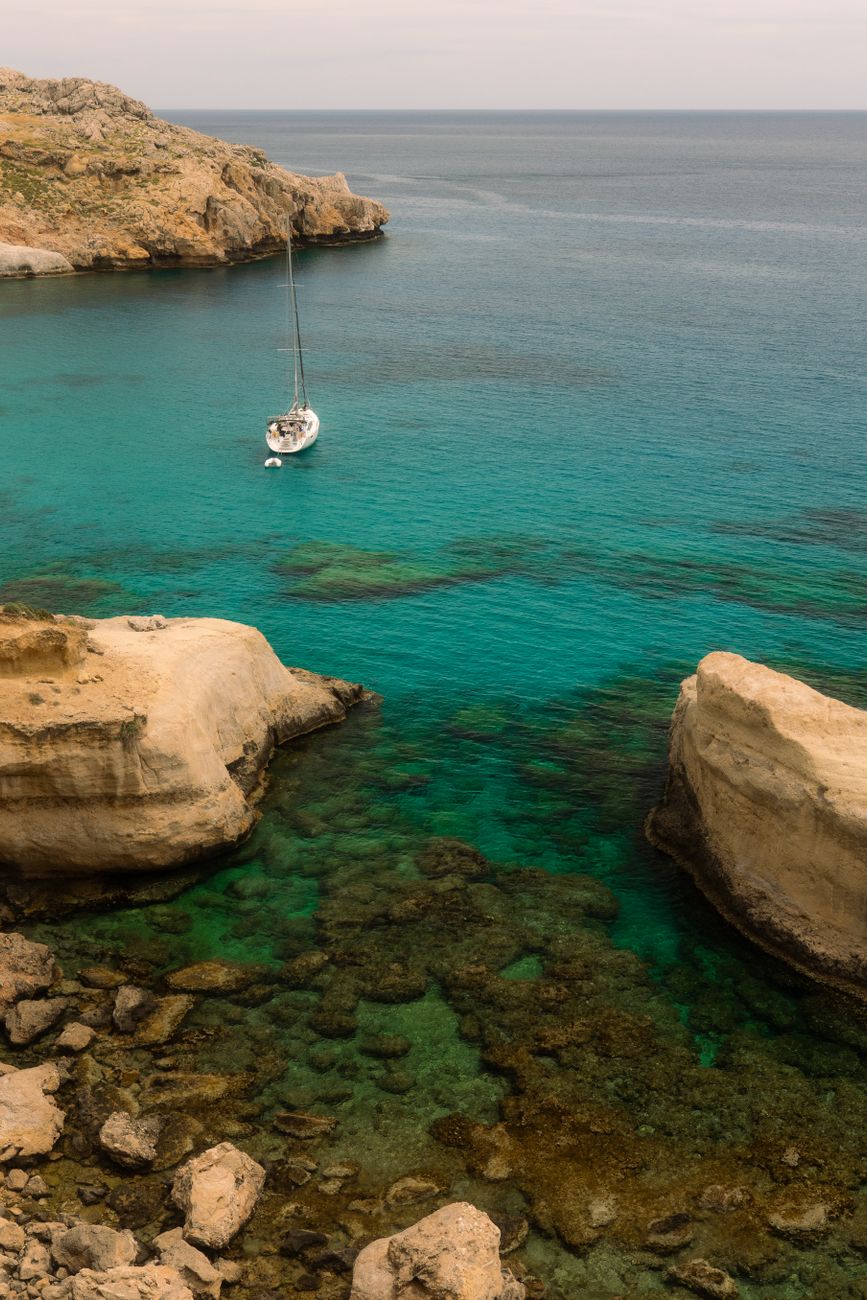
The Unmapped Aegean: Navigating Secluded Coves by Sail and Stars
Table of Contents
"The sea is the great equalizer. When the engine stops and canvas fills with the northern breeze, human timelines dissolve."
1. Listening to the Meltemi Wind
Most travelers experience the Greek islands through crowded ferry docks and bus transfers. Traveling by classic wooden sail vessel reverses the viewpoint entirely. The islands become dramatic geological fortress walls rising abruptly from cobalt depths.
Understanding the Meltemi—the brisk northern wind of the Aegean—teaches patience. You do not impose your schedule on the sea; you adapt to the currents and drop anchor where nature provides shelter.
Volcanic cliffs dropping sheer into turquoise waters near Kimolos.
2. Anchorages of Silence
In uninhabited inlets south of Polyaigos, the water is so crystalline that the vessel appears suspended in thin air above white sand. At night, with no electric lights within fifteen nautical miles, the Milky Way shines with startling clarity.
Swimming at dawn before the breeze picks up reveals an underwater landscape of arches, underwater volcanic caves, and curious schools of sea bream.
3. Mountain Monasteries and Sea Fog
Tying the skiff to a weathered stone bollard in a secluded harbor, you follow donkey paths up rocky slopes fragrant with wild sage and thyme. High above the coastline sits the monastery of Panagia Hozoviotissa, clinging to sheer rock face like a splash of whitewash.
Welcomed by the resident monks with cold spring water and loukoumi, one understands the enduring spiritual power of these austere marine outposts.
4. Sailing Practicalities
- Best Window: Late May through June or September, avoiding peak August northern gales.
- Provisions: Stock up on local capers, barley rusks (paximadia), and goat cheeses in smaller island ports.
- Sustainability: Never drop anchor into protected Neptune sea grass (Posidonia) meadows.